
Multi-chain assets
The same asset name can appear on different networks. Before judging a balance, confirm the active chain, address and token contract.
imtoken multi-chain wallet
Learn how to review assets across networks, choose the right chain, send and receive funds, connect to DApps and inspect approvals. imtoken treats security as part of every workflow, with repeated checks for addresses, networks, permission scope and private-key boundaries.
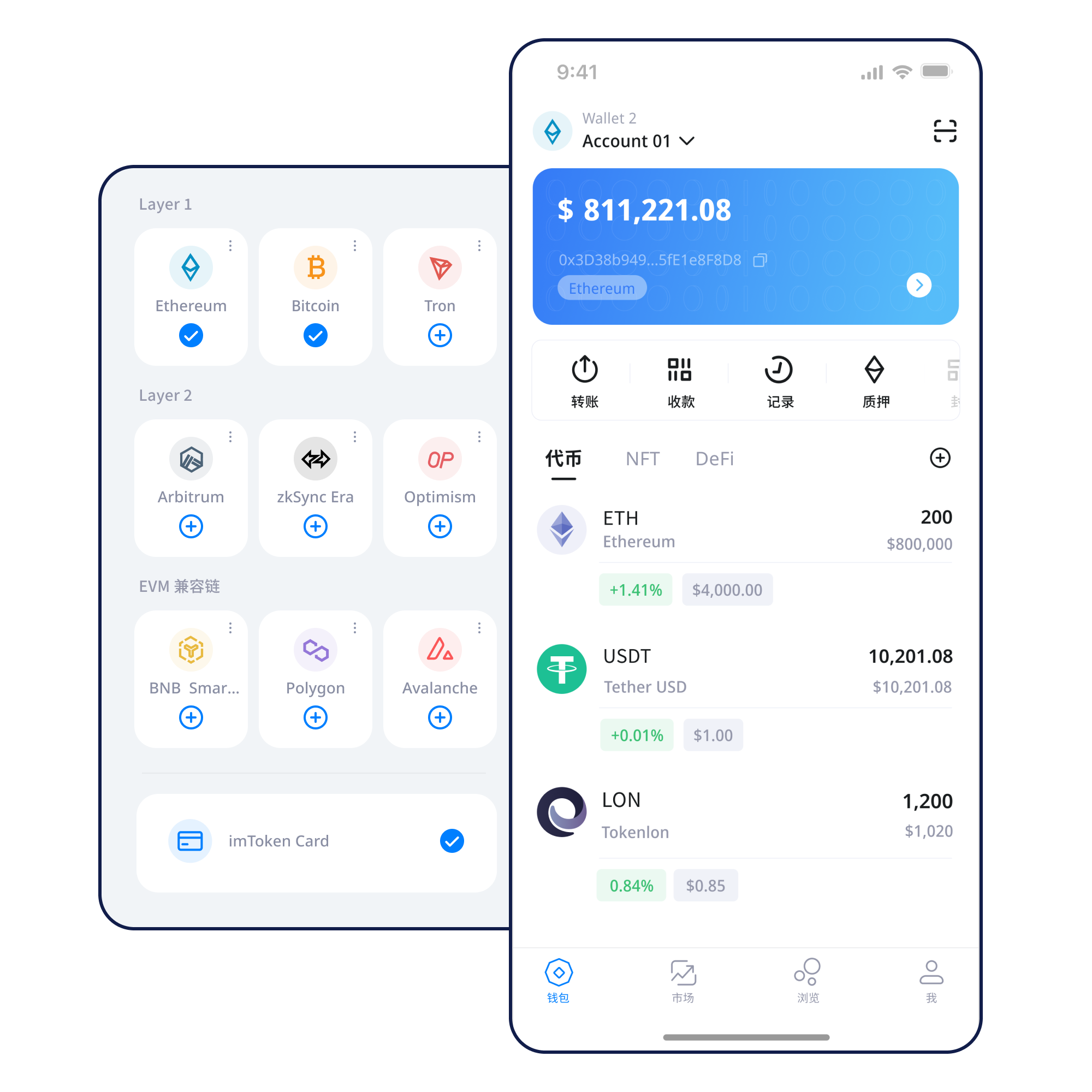
Wallet & Assets
Asset display depends on networks and contracts, transfers depend on addresses and gas, and DApp activity adds signatures and permissions to the picture.
The same asset name can appear on different networks. Before judging a balance, confirm the active chain, address and token contract.
Use the mobile experience to review networks, assets and transaction records, and confirm the active account before connecting to a DApp.
Review the receiving address, network, amount, gas and transaction hash. On-chain transfers generally cannot be reversed by a wallet provider.
Transfer guide →Browser connections require clear account, signature and approval checks. A successful connection does not make later requests automatically trustworthy.
Web connection guide →Seed phrases and private keys remain under the user's control. imtoken staff will not ask for them, and they should never be sent to another person.
Blockchain Networks
Public chains, EVM networks and Layer 2 systems can differ in fees, confirmation behavior and how assets are represented.
Multi-chain does not mean that every asset lives on one chain. A wallet can manage addresses and assets across separate networks, and the active network matters for every action.
Keep reading →Nodes maintain blocks and transaction state together. A block explorer can help verify transaction hashes, addresses and confirmations.
Keep reading →
EVM-compatible chains may share address formats and contract models while still using different gas assets, network parameters and token contracts.
Keep reading →
Layer 2 systems scale a base chain in different ways. Cross-layer movement can involve bridges, settlement timing and exit paths that need separate checks.
Keep reading →
Gas measures execution resources, and fees vary with network conditions. After submission, use the transaction hash to check pending, success or failed states.
Keep reading →Wallet path
Use the on-site download entry rather than links from uncertain sources.
Understand what seed phrases and private keys mean before creation or import.
Keep the seed phrase offline; do not screenshot it, place it in public cloud storage or send it to another person.
Make sure both sides use the same network and review the asset contract and network fee.
For complex situations, a small test can reduce mistakes. Review address, network and amount again before submitting.
Use transaction hashes to verify results and periodically remove DApp connections and approvals you no longer need.
Web3 & DApps
Verify the DApp domain before connecting, then review the requested account and network. Message signatures, transaction signatures and token approvals are separate requests with different consequences.
Security
Wallet security spans secret information, devices, networks, DApps and on-chain activity. Seed phrases and private keys should stay under the user's control, and imtoken staff will never ask for them. Stop when a fake support account, airdrop, remote-control request or unknown approval asks for secrets or excessive permissions. Before a transfer, verify address, network and amount; before a signature or approval, understand the target and scope.
Open Security CenterAcademy
Start with addresses, seed phrases and private keys, then learn networks and gas, and finally use transaction hashes to verify outcomes. For Web3, distinguish between connecting an account, signing a message, sending a transaction and granting a token approval.
Start learning →Ethereum & PoS
Ethereum proof of stake relies on validators. Reward sources, network conditions, withdrawals and exits can change, so participants should understand waiting periods, penalties and smart-contract risk.
Learn about Ethereum staking →Before participating
Validators must meet protocol requirements and may be penalized for downtime or prohibited behavior. Third-party services, contract issues and digital-asset price volatility add further uncertainty. Staking does not guarantee returns.
Learn about PoS & validators →Product & security updates
Topics are grouped around assets, networks, Web3 and security for clearer navigation.
The same asset name may exist on multiple networks, so both sides should confirm the chain first.
Fake support accounts and lookalike sites often ask for secrets under the pretext of recovery.
Rewards are not fixed, exits may involve waiting, and validators and contracts involve technical risk.
FAQ
A seed phrase commonly restores a group of keys derived from it, while a private key directly controls signing for a corresponding address. Both are highly sensitive.
Confirm the network and transaction hash first. The transaction may still be pending, or the recipient may be viewing a different chain.
Gas measures the computational resources needed for on-chain execution. The actual fee depends on network rules, transaction complexity and current conditions.
Not necessarily. Connection usually gives limited account information; later signatures, transactions and token approvals can create separate permissions or on-chain changes.
Check the spender, token, allowance and purpose. If the amount is far above what the action needs or the spender is unfamiliar, stop and investigate.
Layer 2 systems extend a base chain in different ways. Moving assets across layers can involve bridges, settlement timing and separate exit paths.
imtoken
All download buttons lead to the existing download entry. Wallet secrets remain under your control.